From Working Prototype to Finished Product: Planning a Box Build
A working PCBA is only halfway to a product. Follow a startup through enclosure, cabling, parts sourcing, documentation, testing and scaling with box build assembly.
Microplacer team · 15 November 2026 · 4 min read
 EMS & Product
Your board powers up, the LEDs blink and the readings look right on the bench. That moment feels like the finish line, but for a product team it is closer to halfway. To follow the journey, let us walk with an imaginary startup — call it a small team building a smart energy meter — as it turns one working PCBA into a batch of finished, tested units.
The gap between a working PCBA and a shippable product
Our team has a stack of assembled boards and a 3D-printed case held together with tape. Their first pilot customer, however, will not buy a board. They will buy a meter: a closed box with a display, a proper power input, a label with a serial number, and a manual in the carton. Everything between "the board works" and "the customer opens the box" is what box build assembly takes care of.
The common mistake at this stage is to treat the enclosure, cables and packing as small details to sort out later. In practice they decide whether every unit comes out the same, whether connectors line up with the panel cut-outs, and whether the product survives the courier.
What box build covers
Box build is not one fixed service; it grows with your product. The team sat down and listed what their meter actually needed:
| Part of the build | What it means for the meter | What the assembler needs from you |
|---|---|---|
| Enclosure fitting | Main board and display board mounted on standoffs inside a plastic housing. | Assembly drawing or STEP model, screw and standoff details. |
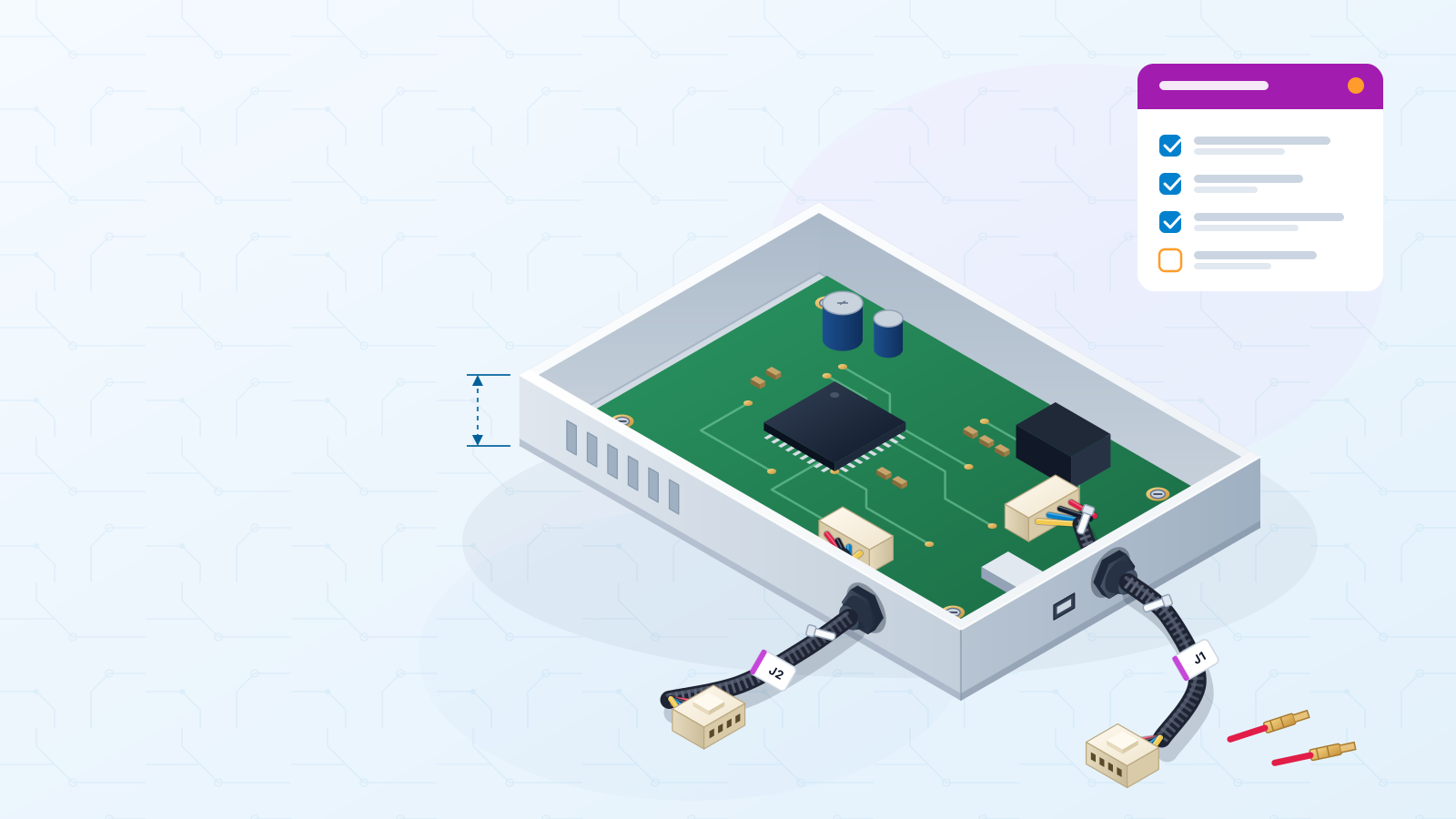
| Internal cabling | A short ribbon to the display and a power lead to the input terminal. | A wiring sketch with the length of each lead and the exact connectors used. |
| Sub-assemblies | A bought-in power module fitted next to the main board. | Part number or supplier details, mounting position. |
| Firmware | Microcontroller programmed before the lid goes on. | Firmware file and programming steps. |
| Labels | Rating label and serial number on the base. | Label artwork, position and numbering format. |
| Testing and packing | Power-up check, then packed with a manual. | Test steps, pass/fail limits, packing instructions. |
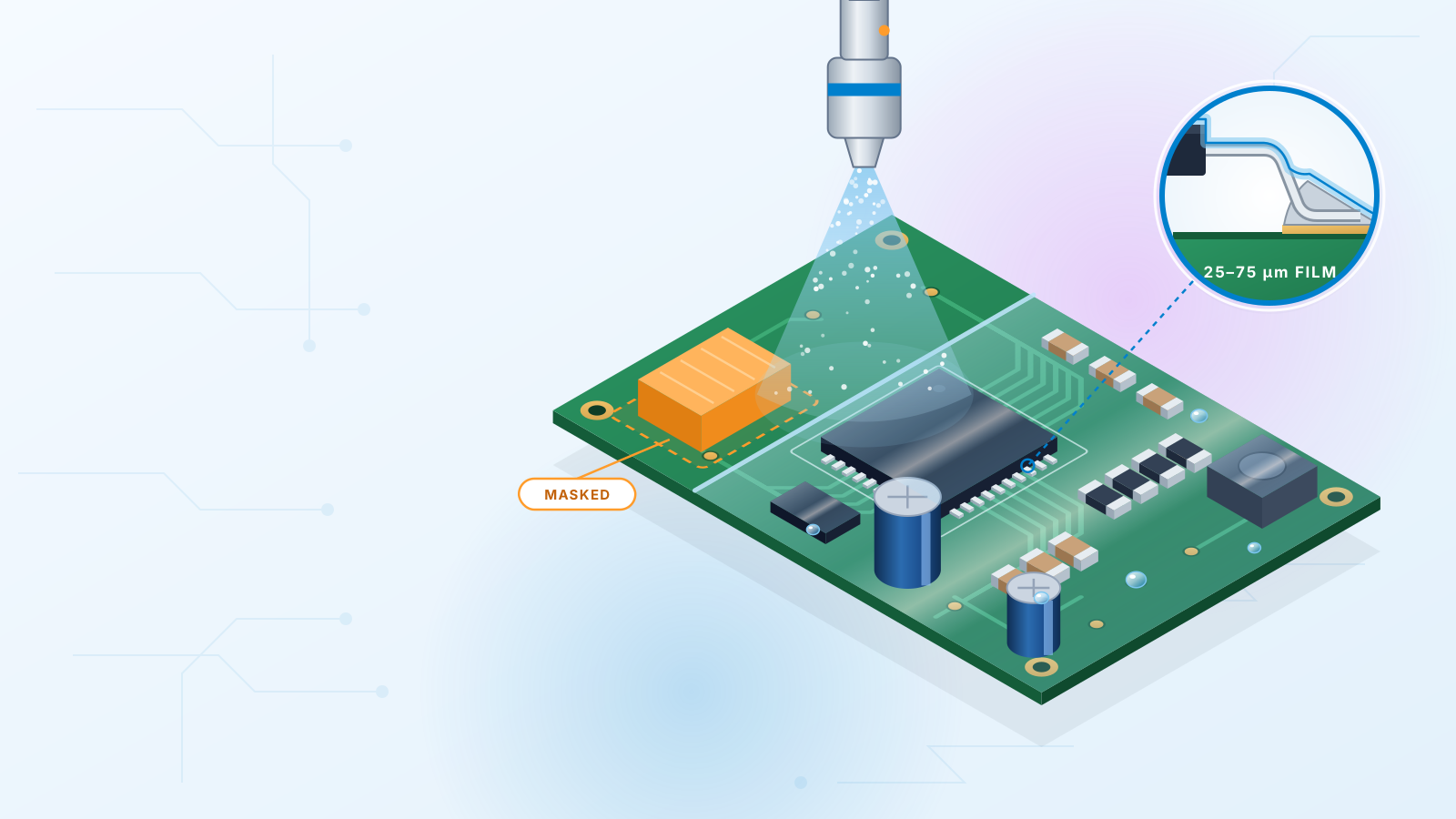
If the meter had needed harsh-environment protection, conformal coating on the boards would have joined the list, and a longer custom loom could have come from a wire harness build.
Turnkey vs consigned parts
Next decision: who buys the parts? With turnkey, you hand over the whole job — the same partner fabricates the bare PCBs, buys the components on your BOM, populates the boards and continues straight into the box build. In a consigned build, you send some or all of the parts yourself.
- Full turnkey suits teams without a purchasing person — a single quote and order, and a single contact for every question.
- Partial turnkey fits when you already hold a few special parts, such as a custom display or a certified radio module.
- Fully consigned makes sense when you have your own buying and stock, and want the assembler to focus on building.
Our startup chose partial turnkey: they already had a small lot of displays, so they shipped those in bags marked with the part number and count, and let everything else be bought against the BOM. One rule worth insisting on: when a part is scarce, any substitute should be proposed to you first, and nothing gets swapped without your written approval.
Documentation the assembler needs
The team learned that most delays come from missing information, not slow hands. Before asking for a quote, they built a single "product pack":
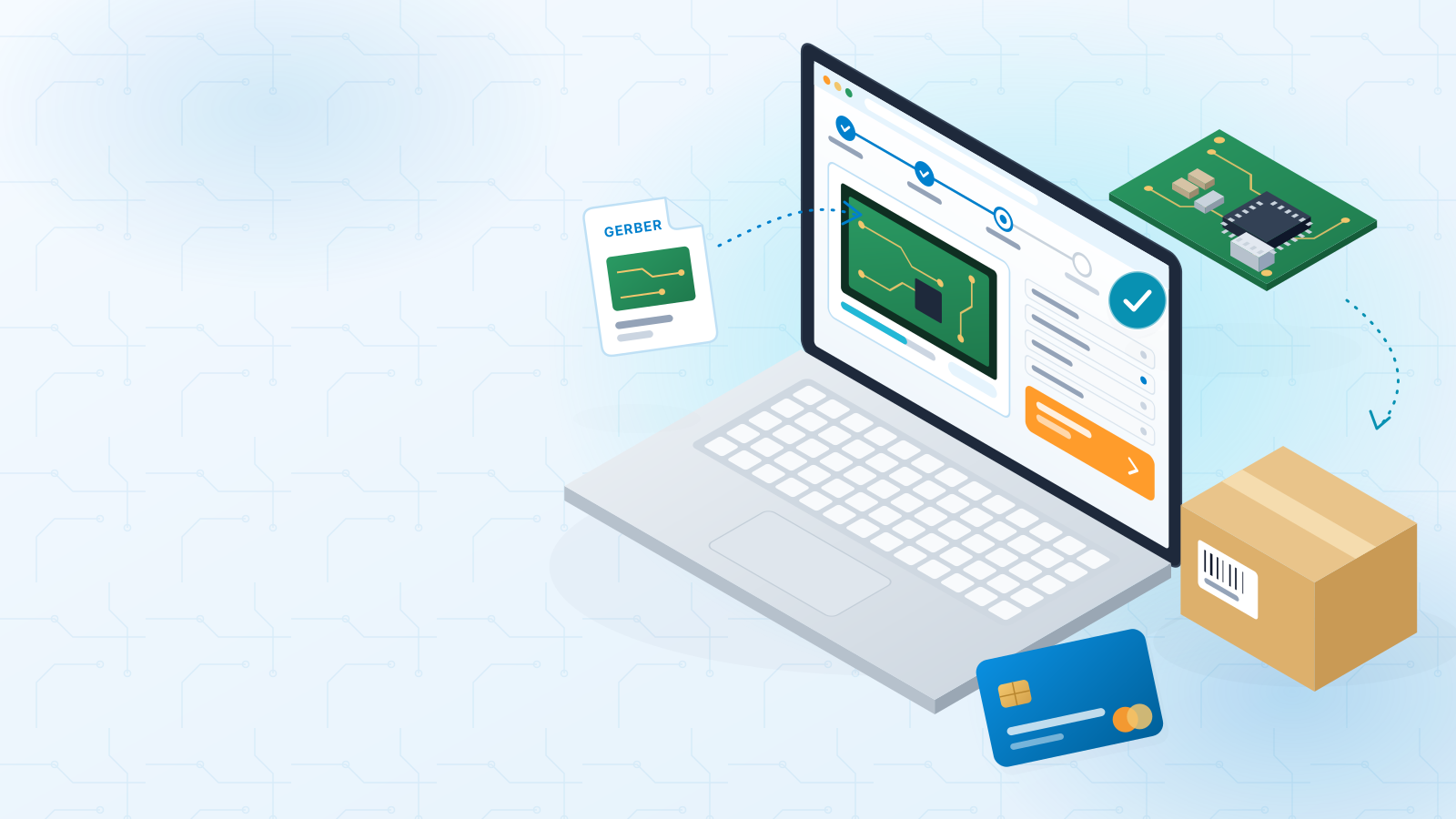
- 1Manufacturing files for each PCB in the unit: Gerbers, its BOM and the component placement (centroid) data.
- 2A full BOM for the finished unit — boards, enclosure, screws, cables, labels and packing material.
- 3An assembly drawing or 3D model showing where everything sits.
- 4A wiring diagram that shows every lead, how long it is and which connector sits at each end.
- 5Test instructions with clear pass/fail limits, plus details of any test jig or software.
- 6Label artwork and packing instructions.
Box build is reviewed and quoted by a team rather than priced instantly, because every enclosure and test procedure is different. Expect the reviewers to come back with questions — how tight a screw should be, where a label goes, whether a substitute part is acceptable — and answer them early, because a quick reply now is cheaper than reworking a batch later.
Testing the finished unit
Quality checks should run through the whole build, not only at the end. A sensible plan for the meter looked like this:
- Engineers check the PCB files before production and raise questions before anything is made.
- Every bare PCB gets a 100% flying-probe electrical test for opens and shorts.
- Assembled boards are inspected for solder defects, wrong or missing parts and polarity.
- Fitting, wiring and labelling follow the approved drawings, so each unit is built the same way.
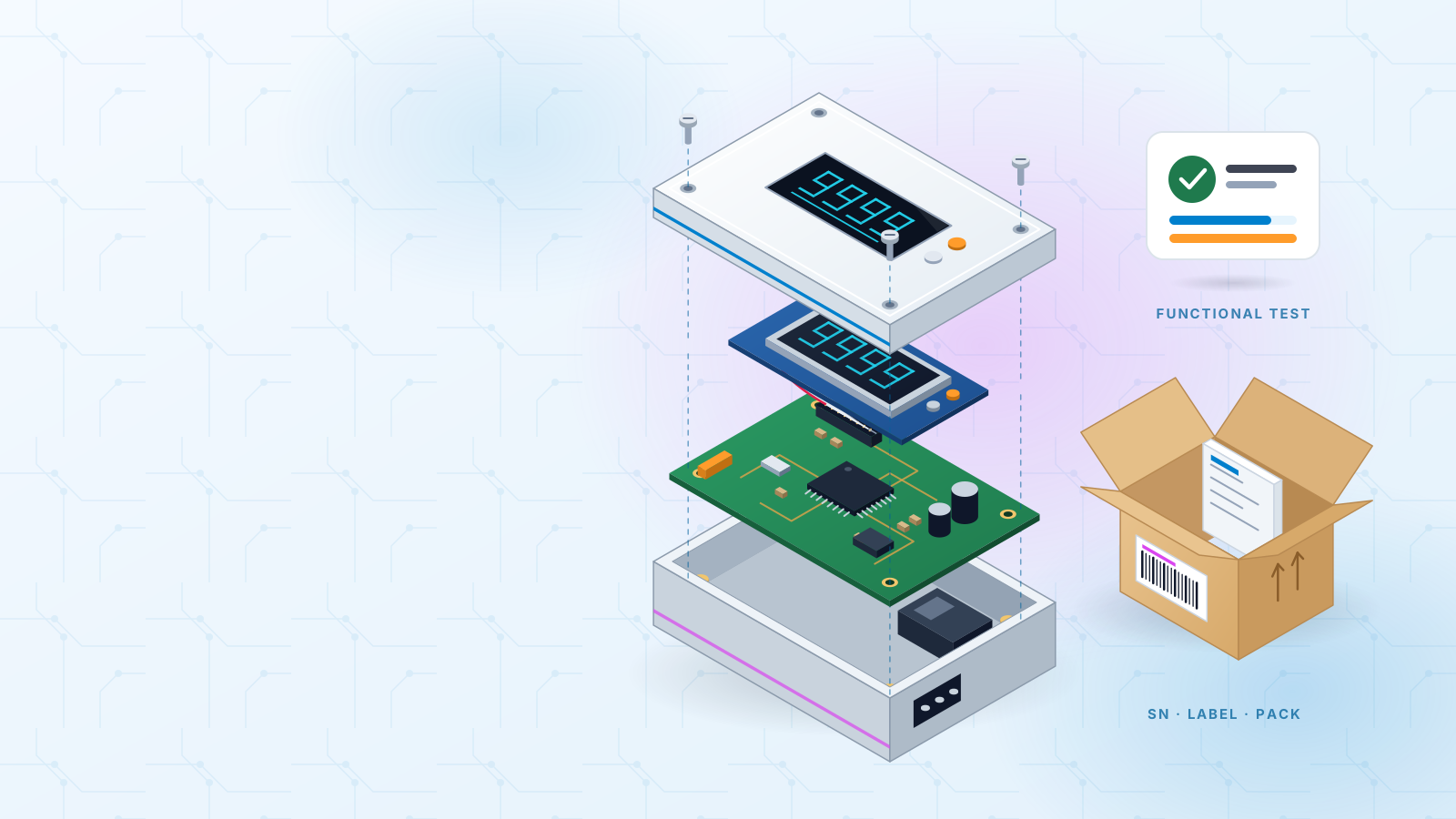
- The final functional test follows your written procedure and limits.
The functional test is the part only you can define. Write it as numbered steps a technician can follow without guessing: apply this voltage, check this reading is between these limits, press this button, confirm the display shows this screen. If you have a jig or a PC test script, share it — it makes every unit get the same check.
Scaling from pilot batch to production
The startup's first run was a small pilot batch. They treated it as a rehearsal: they noted where cables were tight, which screws were awkward to reach and which test steps were unclear, then updated the drawings and instructions before the next order. With the documents already corrected and nothing new to explain, the second order went through with far fewer questions than the first.
A few habits make scaling smoother: keep a revision number on every drawing and BOM, freeze the design before a larger run, and check part availability early for anything with a long lead time.
Your next step
If your board already works and you are ready to put it in a box, read our box build assembly page for the full scope, see how a turnkey PCB and assembly order works, or explore our wider electronics manufacturing services. Then share your product pack with our team for a review and quotation.
#box-build#turnkey-assembly#product-development#functional-testing#ems
Get an instant PCB quote